
Piersma, Prof. Theunis
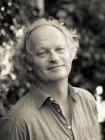
Theunis Piersma is professor of Animal Ecology. Together with his international research team, he studies how the distribution and numbers of waders correlate to climate, food, predators, pathogens and their historical-genetic background. Research is being conducted within the Netherlands as well as in comparable ecosystems in Africa, Australia, North and South America and Asia. Moreover, Piersma works as a Wadden biologist for the Royal Netherlands Institute for Sea Research (NIOZ) on the island of Texel.
For the past years he has concentrated, inter alia, on population studies among black-tailed godwits. He is, for example, involved in a study that tracks godwits in their breeding grounds in Friesland and during their migration to and from southern Europe and Africa via a transmitter in their abdominal cavity. In 2023, Piersma showed that black-tailed godwit migration is learned, not innate. ‘The experiment clearly shows that genetics are not the decisive factor. These godwits mainly learn from their environment. They go to school, as it were.'
In 2014 Piersma was awarded a Spinoza Prize, also referred to as the 'Dutch Nobel Prize'. In 2017 he received a top British ornithology award, followed by the Godman Salvin Prize in 2020.
Piersma is one of the main researchers of the Watch Birds project (‘Waakvogels’), launched in 2023, which will spend five years collecting information on six species that visit the Wadden Sea. By accurately measuring how these birds fare year after year, it is possible to study what the impact of climate change is, for example.
Because the measuring requires a lot of time and effort, Piersma has founded the research centre BirdEyes, housed in Leeuwarden. In this international centre for climate change research and education, the UG collaborates with the Royal Netherlands Institute for Sea Research (NIOZ), the University of Amsterdam and the Fryske Akademy. BirdEyes uses, among other things, the 'big data' birds provide with transmitters. Using this technology on the backs and legs of birds, a large amount of data is released. This provides a lot of information about birds' living conditions.
Previously in the news
-
The Godwit’s Long, Long Nonstop Journey (New York Times)
-
Piersma has been awarded a Spinoza Prize: ‘I embrace the fuzzy nature of ecology’