Externally funded research projects Neurolinguistics and Language Development
Please visit this webapge for current graduate students projects in Neurolinguistics and Language Development

Language development after paediatric brain tumours
NWO Vidi grant, dr. Vânia de Aguiar
Cognitive disorders in children with brain tumours may occur due to damage caused by the tumour or due to necessary medical interventions. The researchers will study these children’s language abilities in relation to the treatment followed, consisting of surgery only or a combination of surgery, chemo, and proton radiotherapy.
More information can be found on the CLADIS-lab website
Unraveling Language Learning in Autism
NWO Open competition L, prof. Petra Hendriks
Pronouns such as 'I' and 'you' are among the most frequently used words in language. Yet, they may pose difficulties for children diagnosed with Autism Spectrum Disorder. In this project we want to find out to what extent these children have difficulties learning, processing and understanding such words, and why this is so. We will do so by tracking these children’s eye gaze in a virtual reality environment and by simulating their language processing in a computer.

CAREful about Language: the role of language in person-centered dementia care for migrants
NWO Vici grant, prof. Merel Keijzer
Dementia is the greatest public health challenge of our time. Needed to manage it are dementia-friendly spaces and person-centered care. But the current care system is not equipped to serve the group of dementia patients that has seen the steepest increase in incidence numbers: those with a migrant background. This project is the first to detail the language barrier that exacerbates health disparities in dementia care and explore the potential of language strategies and home language therapy to transform dementia care for migrant PWD in their communities, in acute and long-term care.
Learning to preserve? Foreign language training as a cognitive vaccine against old-age disorders
CvB- interdisciplinarity Phd projects, prof. Merel Keijzer
Spread the word: The link between language, cognition and wellbeing across the lifespan
Ammodo project, prof. Merel Keijzer
The project consists of two parts: an epidemiological component and an experimental, intervention-based, component. Although the research questions underlying both project and the populations under investigation are vastly different, the overarching theme of both components is the intricate interconnection between the language and cognitive as well as psychosocial health throughout the lifespan. As such, this proposal strongly builds on existing research lines within the Bilingualism and Aging Lab (BALAB; www.balab.nl) in Groningen and adds to it in important ways. EME4EU (samen met Anja Schüppert) - Co-funded by the European Union.
Development of new diagnostic tests for dyslexia in young adults
Grant from Stichting Dyslexie Fonds, dr. Dörte de Kok, dr. Liset Rouweler, dr. Barry de Groot
In 2025, the Centre for Dyslexia & Dyscalculia at the University of Groningen received a grant from the Stichting Dyslexie Fonds for the development of new tests to diagnose dyslexia in highly educated young adults. Dyslexia is a lifelong condition that cannot be outgrown. In some cases it only becomes apparent in higher education due to the higher workload and the increased need to read literature. Nonetheless, there are only few tools available for diagnosis at this stage. Most tests are only normed for elementary or secondary school. In this project, a new spelling and a new non-word reading tasks are developed and normed that are tailored to young adults in higher education. The goal is to integrate these new tests into the existing testing protocol and make them available open access to other institutions. More details on this project can be found on this website.
EME4EU
Co-funded by the European Union, prof. Marije Michel & dr. Anja Schuppert
he EME 4 EU project seeks to transform European Higher Education by empowering institutions to implement high-quality English Medium Education programs. It aims to enhance universities’ capacities, improve legislative frameworks, and foster collaboration among institutions, creating a globally competitive and inclusive education system. By addressing challenges like language barriers and resource gaps, the project promotes accessibility, innovation, and labor market alignment.
The specific objectives EME 4 EU would like to achieve are: (1) Identifying policies and practices for implementing EME across Europe.(2) Raising awareness among decision-makers, teachers, and students about the importance of EME in internationalizing European universities.(3) Equipping university lecturers and policy makers with the skills to implement and leverage the potential of EME.
More information can be found on the website of the project
Groeiende kansen voor leerlingen, leraren, scholen en onderzoekers
NKO, prof. Marije Michel (PI: Michelle Helms-Lorenz van GMW)
Effectief onderwijs speelt een belangrijke rol om de cognitieve en de sociale ontwikkeling van leerlingen te vergroten en waar mogelijk te versnellen. In dit consortium wordt in een experimentele opzet, een evidence-based schoolbrede aanpak verder ontwikkeld, geïmplementeerd en getoetst. Het doel is om de invloed van de sociaal-economische status op taal- en rekenvaardigheid van leerlingen in het voortgezet onderwijs te reduceren, de diversiteit in leerling peer-netwerken te bevorderen, en de vaardigheden van leraren te verbreden. In co-creatie met scholen werken we aan groeiende kansen voor leerlingen, scholen en onderzoekers.
Meer informatie kan worden gevonden op de website van het project
MOI - Meertalig Onderwijs in Grunnen en Drenthe
Nij Begun, onderdeel van de Sociale Agenda voor Groningen en Noord-Drenthe, prof. Marije Michel (PI: Martijn Wieling en Mirjam Günther van der Meij)
MOI is een initiatief dat het Grunnegs en Drèents een plek geeft in het onderwijs. Binnen het project werken onderwijsinstellingen en regionale taalorganisaties samen aan lesmateriaal en een leerlijn voor het Nedersaksisch in het basisonderwijs.Het doel is om leerlingen spelenderwijs kennis te laten maken met de regionale taal en cultuur. Zo groeit het bewustzijn van taaldiversiteit en de verbondenheid met de regio. Vanaf schooljaar 2026–2027 starten basisscholen in Groningen en Drenthe met het programma. Meer informatie is te vinden op de website van dit project
Improving brain tumor surgery with linguistics
NWO Vidi-project dr. Adrià Rofes
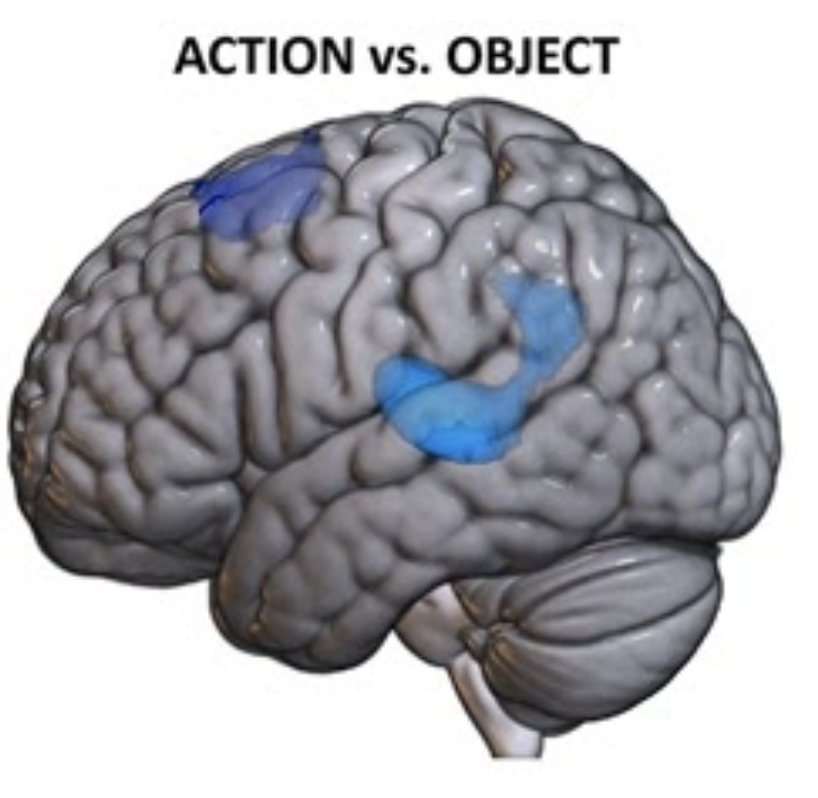
To avoid difficulties with language production, adults undergoing brain tumor surgery are asked to name pictures of objects (e.g., bike). As a neurolinguist, I showed that naming pictures of actions (e.g., swimming) can detect more and different brain areas – this task is now used in several hospitals. Today, I have the knowledge and the network to study a majorly neglected process: language comprehension. I will implement two new tasks and use top-end neuroimaging and computational methods. This research will improve our understanding of language (in the brain) and provide better services to avoid language damage during surgery.
More information can be found on the LTABS-lab website
Language assessment during Deep Brain Stimulation surgery
NWO XS grant dr. Adrià Rofes
We will validate a method to score two narrative stories (Cinderella, Little Red Riding Hood) in people with Parkinson’s disease and Essential Tremor, while they undergo Deep Brain Stimulation surgery. We will apply this method to understand what language capacities (i.e., lexical-semantics and morpho-syntax) are impaired, and whether the scores provided by our new method can predict language impairments three months after surgery. Our research is new because most published work has been on speech outcomes (i.e., acoustics, articulation) after DBS surgery. Therefore, we will start a new research line that applies current neurolinguistic knowledge during surgery in this population.
The Erasmus Mundus PhD Program International Doctorate for Experimental Approaches to Language And Brain (IDEALAB)

IDEALAB offers an outstanding interdisciplinary, laboratory-based 3-year doctoral training to its candidates to study structure, processing and foundations of human language integrating interdisciplinary approaches. Link to project website