
Alumni
Stay in touch!
Stay in touch with your former lecturers and fellow students, share ideas, knowledge, job opportunities, and keep each other informed about philosophical activities through our private LinkedIn Alumni Community Faculty of Philosophy.
The faculty board also publishes an annual newsletter for its alumni. Please find the most recent edition (March 2026).
Lifelong learning
As a member of our group you can attend workshops and events held at the faculty for free. Please find upcoming workshops and colloquia on the faculty calendar. There are also various Winter and Summer Schools on offer.
Testimonials
Although you come across philosophers everywhere in society, a recurring question from our students, and their parents, is: what jobs are there for philosophers? Of course, our alumni are the ones best fit to answer this question. By sharing your knowledge about this, you will not only be of enormous help to our students, you’ll also gain contacts you might profit from later on. You can email us at alumni-wijsbegeerte rug.nl
Find a number of testimonials from philosophy alumni below.
Jona Janssen - Philosophy alumnus
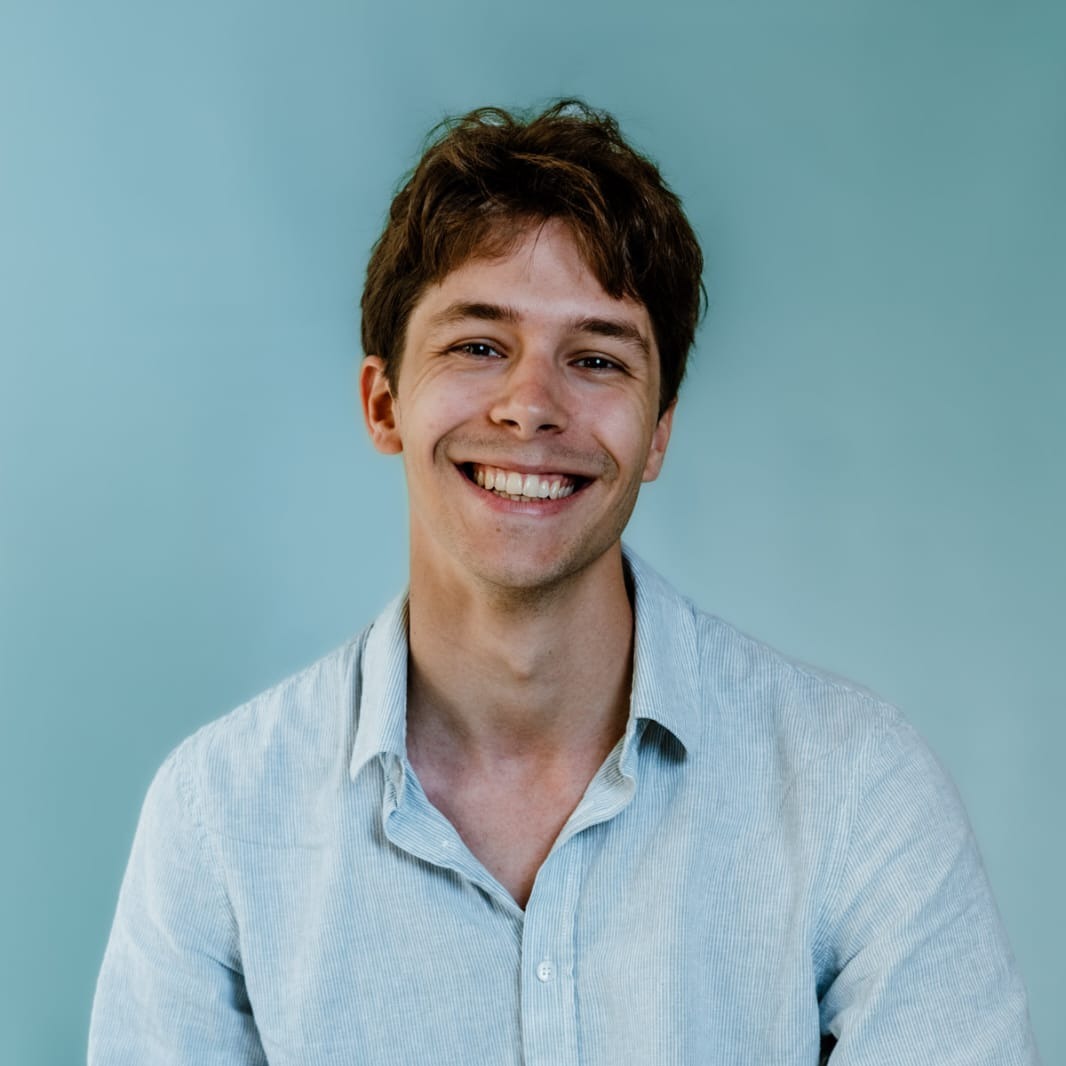
From 2019 until 2025 I studied philosophy in Groningen. First the bachelor, and then the research master. I went to Groningen because of its reputation and its friendly, cozy and collaborative atmosphere. Among philosophers, Groningen is well known for its analytical rigour, high-profile researchers and diverse range of strengths (researchers at this faculty gather disproportionally large sums of research grants and prizes, among which 2 Spinoza prizes (!!)). In applied philosophy (ethics, politics), as well as in theoretical philosophy and in history of philosophy, Groningen hosts several researchers who are leaders in their respective fields. The quality of the research is reflected in the education: students learn directly from top-level experts. Furthermore, philosophers from the University of Groningen are well-embedded with research groups from other faculties. For example, there are crossovers with biology, artificial intelligence, healthcare, physics, political science, mathematics, computer science, linguistics, et cetera, both in research and in education. I particularly enjoyed the courses on philosophy of AI, and ended up combining my philosophy degree with courses from both the AI programme, and the psychology programme. What's also appealing is that Groningen still has its own Faculty of Philosophy, which grants researchers and students a lot of freedom to pursue their interests, and fosters a unique, family-like atmosphere. It should be clear that I think this is really a fantastic place to study, and I would highly recommend it.
Regitze Zeelenberg - Relations manager municipalities
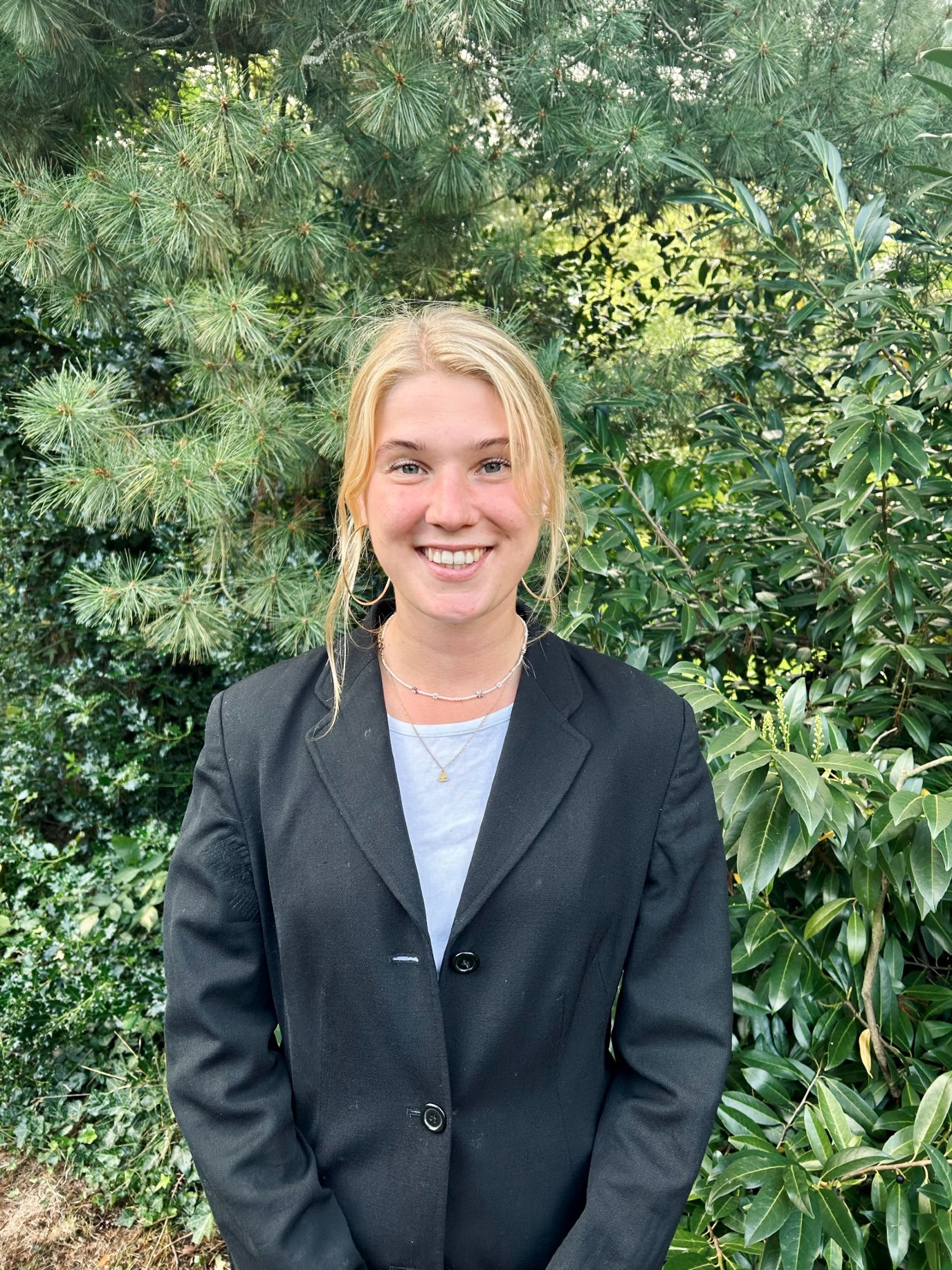
I studied at the Faculty of Philosophy from 2019 until 2024. I thoroughly enjoyed my Bachelor's studies. During my time as a student, I took the time to also indulge in other passions alongside my academic ambitions. For example, I took part in the think tank board at the local political party Student&Stad, and I was active within my student association. The faculty always gave me the space to be able to divide my time in the ways that I wanted to, for which I also greatly thank the study advisors, who supported me in this.
After this, I followed the Master's Philosophy Now at the Erasmus University in Rotterdam and in September 2025 I started my job at the Youth Education Fund, where I work as the relations manager municipalities, maintaining contact and improving national systems for children in the Netherlands who grow up in poverty.
Upon first look, philosophy may not seem to be very connected to this, but I can see how the programme got me here. Systemic changes are not only technical, but they also consider the following: which systems should be leading; how does policy affect people; how do we, as a society, deal with vulnerable groups? By recognizing structural systems and analysing policy, it's possible to look farther ahead than just "putting on a band-aid". Philosophy has helped me formulate clearly, ask critical questions, make complex cases comprehensible, and getting to the core of a problem. By using distributive theories of justice, you can learn all the different ways to arrange society in fair ways. Political philosophy has taught me what really matters: how I can challenge municipalities to look further than just a case, namely, at a person, and to eventually choose to adjuts policy in a way that can make a difference in someone's day-to-day life.
Job de Grefte - Assistant professor
With great expectations, I arrived at the Faculty of Philosophy in 2007. I had taken the propaedeutic year of the study Business Administration at the Faculty of Economics and Business and was looking very much forward to some more abstract material. I was not disappointed. The faculty of philosophy is a small and friendly place of high-quality thinking. I remember fondly the general introduction course that gave students a ‘taster’ of many subjects later to be developed in the programme. Overall, the Philosophy BA programme offered a comprehensive and well-rounded introduction to the main fields and styles of philosophy, laying a solid foundation for my eventual specialization during my Master’s studies.
It was fun too; it made me enthusiastic enough to apply for the Research Master (at the same Faculty of Philosophy), and focus only on philosophy after I completed my degrees in Philosophy and Business Administration. The RM programme was even more fun, as it allowed for close contact with and supervision by staff, and encouraged a term abroad (in my case, St. Andrews). It prepared me well for an academic career, culminating in a thesis a version of which would ultimately be published in a good journal.
After the RM, I continued at the faculty as a PhD candidate. Here, the support and contact with staff intensified even more, and the line between being a student and being a staff member blurred considerably. I was given opportunities to teach and help with manuscript and grant preparation. These experiences were crucial for my career trajectory: first as a lecturer at the Faculty of Philosophy, and now as an assistant professor at the Faculty of Economics and Business.
Jesse Tangerman - Policy officer at the municipality of Groningen
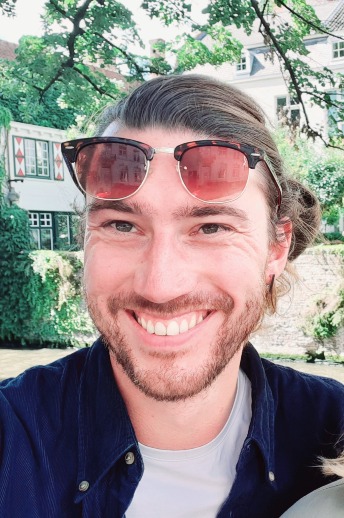
In 2019, I started my Bachelor's at the Faculty of Philosophy and in 2022 I started the Master's Philosophy and Society, which I believe is now part of the regular Master's program. I obtained my degree in August 2023 . In September 2024, I started as a policy officer at the municipality of Groningen.
During my program, I already knew that I wanted to end up in a public function. This influenced my choice of Master's. Philosophy and Society required a long-term internship, which seemed useful for finding work in the future to me. This way, I had something to point to, besides side jobs, as (semi-)professional experience.
It's difficult to link specific philosiphical areas to my work, as I encounter bits of everything, just in significantly less rigid ways than in the academic world. The municipality operates at the edge of practice and theory. Because of this, I am often weighing different needs; the ideals of politics and the practice of implementation. I've noticed that my philosophical background especially helps here. As we are supposed to convey public responsibility, internal consistency is very important and I strongly believe that a philosophical view helps with this. Breaking open problems and testing all separate elements to what we've said about them before, for one. Philosophy has also helped me think abstractly. It cannot always be applied, but it helps to keep the bigger picture within view.
Regardless, there are a bunch of concrete philosophical questions that I find myself thinking about daily. Resident participation in a representative democratic system, the nodes and rights of special housing, and the municipality's obligations towards nature, to name a few.
Ymko Braaksma - Planbureau Fryslân
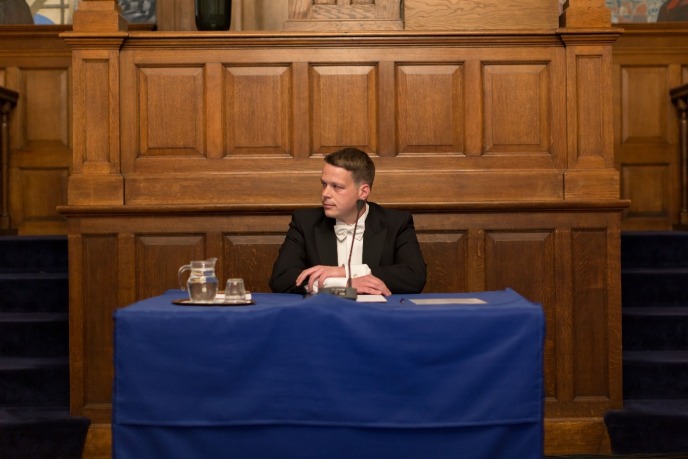
At the Faculty of Philosophy, I consecutively earned my Bahcelor's Philosophy of a Specific Discipline (2013-2014) and the Research Master (2014-2016), and finished a promotion process (2016-2022). I specialized in the areas of history, philosophy, and philosophy of history.
One of the questions that occupied my mind throughout this entire period was: 'Is it possible to learn from the past and, if so, how?' The knowledge that I gained as a result is very useful in my current work for Planbureau Fryslân. There, I help government organizations to learn from the execution of their own policies. Additionally, I am responsible for the continuous development of the method of the learning policy evaluation at the planning bureau. For this, I use the works of philosophers such as John Dewey (1859-1952), R.G. Collingwood (1889-1943) and Frank Ankersmit (1945- ).
As well as that, I developed a number of skills that I can apply almost daily during my studies. Obvious ones include critical thinking, precise reading and analysing of texts, and being able to put myself in someone else's shoes.
Most useful, however, is probably being able to think about the bigger picture. The philosophers I studied during my courses were often systematic thinkers: they focused on the entire spectrum of philosophy, from metaphysics to ethics and political philosophy, and they saw these fields as one. To be able to understand these philosophers, I had to think in similar ways.
This is a skill that is also very useful at Planbureau Fryslân. In government policy, areas oftentimes come together - economics, physical space, and social environments - all of which affect one another. Moreover, different actors, from citizens to entrepreneurs and governments, evolve activities that relate to the domains and to one another. My philosophy degree helps me to be able to see through the chaos.
Miranda Lahuis - Webmaster municipality
I studied at the Faculty of Philosophy from 2013 through 2019. First I finished the Bachelor's program and then I followed the one-year Master's of Philosophy and Society. The Bachelor's program was a broad course about the history of philosophy and all types of fields with kind and enthousiastic teachers. Despite the program's breadth (e.g. history, ethics, logic, science and social- and political philosophy), we were also taught about these areas in depth.
The lectures and seminars were interesting and many people always attended, sometimes even from other programs. As philosophy students, we could even learn from them.
The key skills I learned are mainly critical thinking, clear writing and argumentation, analysing complex cases and studying reality in your own way by thinking transcendantly.
During the Master's program, which focuses on contributing to the public debate as a philosopher, everything came together nicely in an internship as editor at Stichting Noorderbreedte. Here, I was able to write pieces for the magazine and interview people. This way, I was able to make my contribution to certain societal questions.
At my current job as webmaster for a municipality I am able to use my learned skills very well. Teacing my colleagues about the importance of certain laws and requirements for website is easier thanks to this foundation. Additionally, with the Bachelor's and Master's, I also learned to structure my own thinking. This way, I can analyse whatever I face well, a skill that can be applied anywhere.
Share your experiences and contribute to the faculty!
We would very much like to know about your experiences on the job market. How well do you feel the programme you followed with us prepared you for your job? Did you acquire adequate skills during your studies and is your knowledge sufficient and do you have points of improvement for the curriculum? Or does your employer have a philosophical research question that the Kenniscentrum Filosofie could help with? Or are you interested in giving a guest lecture, speaking on a career- or alumni day, or sharing a job offer or internship? You can contact:
-
Marc Pauly or Yorick Karseboom for research questions
-
The career officer Sjoerd Griffioen for career-related questions and affairs
-
The alumni officer Dominic Kruize (alumni-wijsbegeerte@rug.nl) for other questions